
Former Japanese Prime Minister Yasuo Fukuda, who strengthened ties with the Arab world, dies at 90
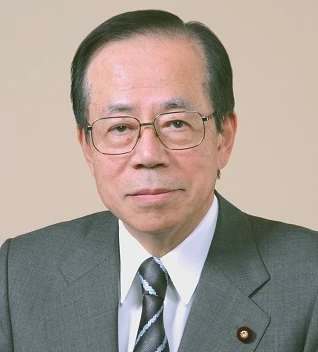


TOKYO: Former Japanese Prime Minister FUKUDA Yasuo, who spent 17 years in the oil industry before entering politics, has died at age 90. Japanese media reported that he passed away from heart failure on October 22.
Fukuda served as prime minister from September 2007 to September 2008, a tenure marked by his commitment to international dialogue and cooperation. Before his political career, he graduated from Waseda University in 1959 and worked for Maruzen Petroleum — a predecessor to Cosmo Oil — until 1976. This included a two-year assignment in Los Angeles starting in 1962. He transitioned into politics in 1976 as a secretary to his father, Prime Minister Takeo Fukuda, and was elected to the House of Representatives in 1990.
His background in the petroleum industry proved vital to Japan’s economic relations with the Middle East. A significant milestone of his premiership occurred on December 17, 2007, when he and then-Crown Prince of Abu Dhabi, Sheikh Mohammed bin Zayed Al Nahyan, oversaw a $3 billion loan agreement between the Japan Bank for International Cooperation (JBIC) and the Abu Dhabi National Oil Company (ADNOC). This deal aimed to secure a stable, long-term crude oil supply for Japan, with companies like Cosmo Oil expected to secure contracts for 120,000 barrels per day.
Beyond the Gulf, Fukuda worked to broaden Japan’s diplomatic reach. During the 2008 G8 Hokkaido Toyako Summit, he met with Algerian President Abdelaziz Bouteflika, emphasizing Algeria’s importance to regional stability. His administration also maintained support for the Israeli-Palestinian peace process, advocating for the establishment of a viable Palestinian state and the strengthening of Palestinian institutions.
Fukuda’s diplomatic focus mirrored his father’s legacy; FUKUAD Takeo had previously visited Saudi Arabia, Qatar, and the UAE in 1978 to bolster Japan’s regional ties. Yasuo Fukuda’s career uniquely bridged the gap between the private energy sector and high-level government diplomacy, leaving a lasting impact on Japan’s energy security and its engagement with the Arab world.