
Japanese ‘shogi’ philosophy could offer lessons for Middle East peace, envoy says
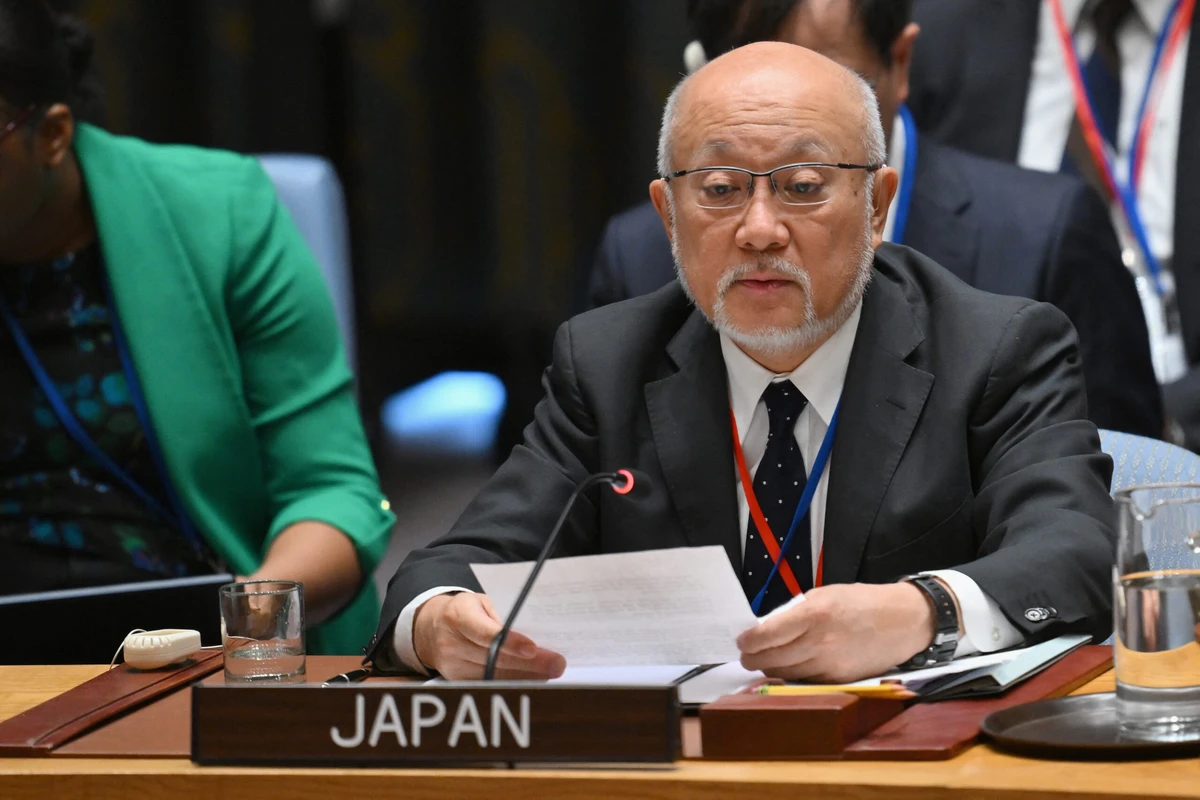


TOKYO: The philosophy behind Japan's traditional strategy game shogi, in which defeated opponents can be brought back into play rather than permanently excluded, could offer lessons for resolving conflicts in the Middle East, according to a Japanese peace envoy.
Tsukasa Uemura, the Japanese government's special envoy for the Middle East peace process, said the game's approach to reintegrating captured pieces reflects a broader principle of reconciliation: Victory should not mean excluding the defeated side from the future.
In shogi, a player can capture an opponent's piece and later return it to the board as part of their own forces. Uemura sees this as a political metaphor for allowing former adversaries to participate in rebuilding societies after conflict.
He suggested that a victorious side should leave room for the defeated party in a new political order, illustrating the principle with a hypothetical 60-40 division of gains. The example, he explained, was not intended as a precise formula but as a way of emphasizing compromise over exclusion.
Drawing on Japan's history of civil wars, Uemura argued that prolonged fighting and attempts to eliminate opponents entirely ultimately come at a cost to all sides.
However, he acknowledged that Japan's historical experience could not simply be transplanted into the Middle East, where conflicts involve different political, historical and social circumstances.
Instead, he suggested that the underlying principles of reconciliation and reintegration could provide a starting point for considering alternative approaches to resolving disputes.
Japan's role in regional stability
Uemura described the Middle East and its surrounding regions as central to global stability because of their natural resources, strategic location, cultural heritage and economic potential.
His broader definition of the region encompasses the Gulf, Turkiye, Iran, the Levant, Pakistan, Afghanistan, Central Asia, Egypt and North Africa.
He said continuing conflicts, including the war in Gaza and the confrontation involving Iran, Israel and the United States, have consequences extending well beyond the countries directly involved.
The possibility of further escalation and the involvement of additional regional actors remains a major concern, particularly as instability affects Gulf countries and international trade routes.
Although Japan is not a major military actor in the Middle East, Uemura said Tokyo seeks to contribute to regional security and prosperity through diplomacy, humanitarian assistance, capacity building and development cooperation.
He emphasized that stability in the region is important not only to Japan's interests but also to the wider international community.
Supporting Palestinian development
On the Palestinian issue, Uemura reaffirmed Japan's longstanding support for a two-state solution, saying Tokyo's position remains unchanged.
He also highlighted Japan's contributions to humanitarian assistance in Gaza and the West Bank, efforts connected to the implementation of a comprehensive plan for Gaza, and support for developing the Palestinian administrative capabilities needed to govern the territory.
A central element of Japan's approach is the Conference on Cooperation among East Asian Countries for Palestinian Development (CEAPAD), which brings together Japan and other Asian nations, including the Philippines, Indonesia, Malaysia and Singapore.
Uemura described the initiative as a practical framework for coordinating development assistance rather than a platform for political condemnation.
According to Japan's Ministry of Foreign Affairs, CEAPAD aims to mobilize the expertise and resources of East Asian countries to support Palestinian economic development.
He also pointed to the Jericho Agro-Industrial Park as an example of Japan's long-term development cooperation with the Palestinians.
The project, launched nearly two decades ago, aims to improve infrastructure and encourage Palestinian businesses to establish manufacturing facilities, particularly in agricultural and food-processing industries.
Its objectives include creating employment opportunities, increasing production and helping Palestinian products reach international markets.
Uemura cited the transportation of goods across the King Hussein Bridge to Amman, and onward to Gulf markets, as one potential export route.
While he said the project had achieved positive results, he acknowledged that the war and humanitarian crisis of recent years had created challenges far beyond the usual obstacles to economic development.
The project forms part of Japan's Corridor for Peace and Prosperity initiative, which seeks to strengthen the Palestinian economy through regional cooperation.
On Israeli settlements in the occupied West Bank, Uemura reiterated Japan's position that they are illegal under international law.
He said Tokyo continues to raise the issue with Israeli officials, particularly its concerns over the E1 settlement project east of Jerusalem, and calls for an end to settlement expansion.
Concerns over regional escalation
Turning to the confrontation involving Iran, Uemura expressed concern about the spread of hostilities into the Gulf and the potential threats to maritime security in the Strait of Hormuz and Bab Al-Mandab.
He also highlighted attacks affecting Gulf countries, civilians and commercial vessels.
According to Uemura, Japan has maintained diplomatic contact with Tehran since the crisis began in February, including several exchanges between the Japanese prime minister and the Iranian president.
He said Japan's foreign minister had also held approximately 10 telephone conversations with Iranian Foreign Minister Abbas Araghchi.
Tokyo's efforts, he explained, have focused on encouraging restraint, reducing tensions and safeguarding international shipping routes.
On Yemen, Uemura referred to a telephone conversation between Japan's prime minister and the chairman of Yemen's Presidential Leadership Council, as well as Japanese statements calling for an end to hostilities and attacks threatening regional countries, including Saudi Arabia.
Lessons from Japan's development
Beyond diplomacy and conflict resolution, Uemura emphasized that modernization does not necessarily require countries to adopt Western models or abandon their cultural identities.
He pointed to Japan's own development as an example of a country that built a modern state while retaining elements of its history, traditions and culture.
He encouraged Middle Eastern countries to draw on their own heritage, experience and human resources as they pursue economic and social development.
For Uemura, the lesson of shogi extends beyond the board game itself.
Its central message, he suggested, is that lasting stability depends not simply on defeating an adversary, but on creating a political and social order in which former opponents can also participate.